


Return on Ad Spend (ROAS) is often treated as the ultimate indicator of success in paid marketing. A high number feels reassuring, and a low one sparks immediate concern. But when ROAS becomes the only metric guiding decisions, it can quietly push brands in the wrong direction.
The problem isn’t ROAS itself — it’s the weight we give it. Looking at advertising through a single lens oversimplifies reality and hides risks that don’t show up in short-term reports.
The Illusion of “Good Performance”:
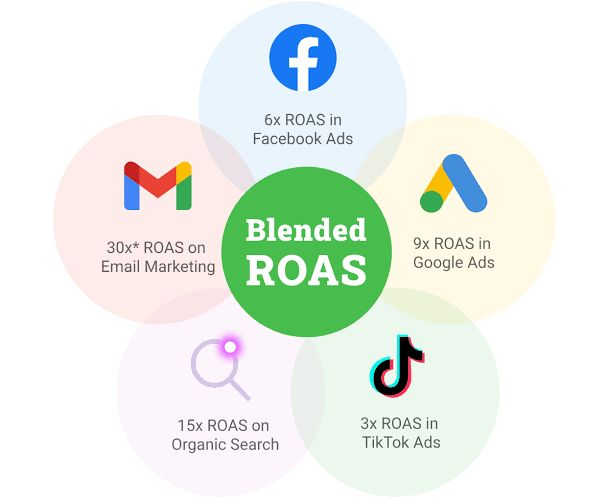
A strong ROAS can look impressive on dashboards, but it does not always reflect healthy marketing performance. Many campaigns achieve high returns by targeting existing customers, brand searches, or low-intent audiences that were already close to converting.
While this inflates results, it often limits growth. New audience testing, creative exploration, and market expansion typically show lower immediate returns — yet these efforts are critical for scaling.
What ROAS Doesn’t Tell You:
Focusing only on ROAS ignores key questions:
- Are you acquiring new customers or recycling the same ones?
- Is growth sustainable or slowly plateauing?
- Are you sacrificing future demand for short-term efficiency?
This is where customer lifetime value becomes essential. A campaign with modest returns today may introduce high-value customers who generate revenue over months or years. Judging such efforts solely on immediate returns can lead to underinvestment in long-term growth.
Short-Term Efficiency vs. Long-Term Growth:
When teams optimize only for ROAS, they tend to avoid experimentation. Creative risks are minimized, audiences become narrower, and brands slowly lose momentum. Marketing performance should be measured by balance — efficiency paired with expansion.
Growth requires space to test, learn, and refine. That process rarely looks perfect in the short term, but it builds resilience over time.
A Smarter Way to Measure Success:
ROAS is useful — just not in isolation. It should be viewed alongside customer lifetime value, acquisition cost, retention, and overall business impact. This is where content-that-sells-without-sounding-salesy plays a critical role, helping brands communicate value in a way that supports long-term trust and measurable growth. Together, these elements provide a clearer picture of whether marketing is truly driving progress or simply maintaining the status.
Final Thoughts:
ROAS is a tool, not a strategy. When used alone, it can create false confidence and limit potential. Sustainable marketing performance comes from understanding the full journey — not just the last click.
The brands that grow strongest are the ones willing to look beyond a single number and invest in metrics that reflect real, lasting value.
Leave a Comment: