


The world of digital discovery is shifting fast. For more than two decades, brands have relied on the benefits of search engine optimization to get found, earn clicks, and drive revenue. But now we’re entering a new era where traditional search engines share the stage with powerful generative models like open AI platforms, which deliver instant answers rather than links.
This evolution doesn’t signal the death of SEO; it simply redefines what visibility means. Today, savvy marketers must understand the difference between SEO (Search Engine Optimization) and GEO (Generative Engine Optimization), and how to optimize effectively for both people and intelligent answer engines.
What Is Traditional SEO and Why It Still Matters?
Search engine optimization has long been the backbone of digital marketing. It involves improving a website’s relevance and authority so that it ranks higher in search engine results pages (SERPs). Successful SEO helps businesses:
- Increase organic visibility
- Attract high-intent traffic
- Build long-term digital authority
When done right, the benefits of search engine optimization extend far beyond rankings. Higher organic visibility leads to increased credibility, boosted conversions, and stronger brand equity. This explains why so many organizations invest in professional search engine optimization services because the right expertise can unlock consistent, measurable growth.
For example, a retailer ranking on the first page of Google for core keywords often sees a dramatic uptick in leads without increasing ad spend. That’s the power of a well-executed SEO strategy: compounding visibility that compounds revenue.
Enter GEO: The New Frontier of Discovery:
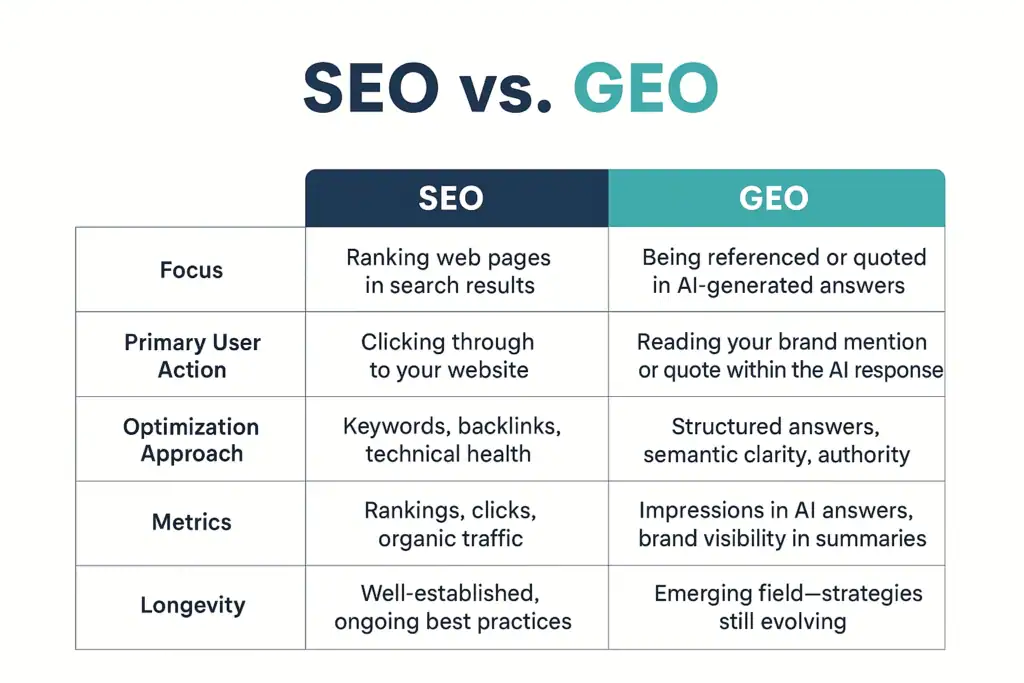
While SEO focuses on ranking web pages in response to queries, GEO (Generative Engine Optimization) is about earning mentions, recommendations, and trust inside answer engines intelligent systems powered by models like open AI. These systems read across vast datasets, summarize insights, and generate direct answers rather than a list of links.
Imagine a potential customer asking a question like:
“What’s the best way to reduce churn in SaaS products?”
With traditional search, the user gets links to blog posts and guides. With an AI answer engine, they get a concise, synthesized answer right in the interface.
That’s where GEO comes in.
Instead of focusing solely on keywords and backlinks (the core of traditional SEO), GEO emphasizes real-world authority signals, such as:
- Thought leadership content published across respected platforms
- Frequently referenced insights in industry discussions
- Consistent expert contributions that AI models can “learn from”
- Positive sentiment and expert consensus around your brand
In short, GEO is about being referenced and trusted by humans and the systems that learn from human knowledge.
Why Brands Need Both SEO and GEO?
Some marketers worry that the rise of generative answer engines will make SEO obsolete. That’s not accurate, it’s just an evolution.
SEO = Discovery
Traditional SEO gets your content found. It drives traffic from people actively searching for solutions. It builds domain authority through technical optimization, content relevance, and link equity. Investing in professional search engine optimization services ensures your site stays visible in a crowded web landscape.
GEO = Credibility Inside AI Answers
GEO ensures your brand shows up inside the answer itself. This is especially critical as more people rely on AI assistants and summary responses to make quick decisions. GEO doesn’t replace SEO, it amplifies it. Brands that excel at GEO still benefit from organic search but also gain visibility in the moments before someone clicks a link.
Together, SEO and GEO form a powerful combination: one brings people to your content, and the other ensures your brand is trusted when people don’t click through at all.
How to Optimize for Both Humans and AI Engines:
Here are practical steps brands can take to balance traditional SEO with the emerging demands of GEO:
1. Create High-Quality, Insightful Content
AI engines reward depth and clarity. Write content that answers real questions comprehensively, and regularly update it to reflect evolving trends.
2. Build Thought Leadership
Participate in industry conversations on reputable sites, webinars, and forums. The more your insights circulate across respected platforms, the more likely AI systems are to surface you.
3. Focus on Search Intent
Understand what people mean when they search. This improves both your keyword targeting (SEO) and the usefulness of your content for AI summarization.
4. Be Consistent Across Channels
Repetition matters. If your brand tells the same story across blogs, social media, and expert platforms, AI engines learn those signals faster, strengthening your GEO presence.
5. Track Real Business Outcomes
It’s not enough for content to rank or be featured in AI answers. Look at conversions, engagement, and retention. This aligns your marketing investment with tangible business impact.
The Future of Digital Visibility:
The line between SEO and GEO will continue to blur as intelligent systems become more central to search behavior. But one thing is clear: brands that combine traditional optimization with authority-driven visibility inside AI answers will win the moments that matter most.
Leave a Comment: